
On (Great) Expectations
The Substance, Megalopolis, and Garth Greenwell's Small Rain walk into a bar...

I was sitting around with friends when Coralie Fargeat’s The Substance came up in conversation. My favourite film of the year, a perfect movie, five stars, everyone said, and even though I disagreed I didn’t say so until a friend, who I’d spoken to days earlier and who knew my real feelings about the film, asked what I thought. Spencer hated it, he said, putting me on the spot.

The truth is I enjoyed The Substance but think it was overhyped and undeserving of some of its acclaim. The caveat here is that formally rating art is kind of stupid but also very fun and it would be silly not to. After seeing the movie and talking about it for an hour or two I gave it a modest three and a half stars out of five. I shared this fact with my friends and emphasized my ultimately very ordinary and very vanilla take, but the group’s desire to pile on had peaked. I became the evening’s scapegoat. These days either you love or you hate.
I liked the movie for what it was, an outrageous horror/sci-fi exploitation film, which became clear after its two hour runtime. What I didn’t like was the movie I felt was sold to me all the way up to the film’s opening credits: the biting satire and social commentary and the winner of best screenplay at Cannes (beamed into the theatre by way of its own title card). The Substance successfully achieved only one of the above, perfectly outrageous, but lacked in the area of satire or social commentary. And as for winning best screenplay at Cannes, I don’t actually know what else played at the festival or the criteria for winning the award (see: rating art) but the story fell short of the film’s unique concept.
I am part of the problem, though. The Substance ads targeted me on social media, I watched a trailer, I was complicit in the hype. Yet, out of the three ideas I had of the film going into it, only the genre is the business of the film. Of course, the satirical elements of the film are also the business of the film, which we can argue about whether or not were received or achieved as intended, but I think the publicity around the film oversold it. The film does play with satirical elements in its more absurd moments, but I don’t think its intention was to make us think any differently about aging or youth or beauty or our bodies or men or women, and simply identifying the objectification of these many elements does not constitute critique. The film is as hot, sweaty, and sexy as the films it satirizes, or the idea of the films it satirizes, but to no real end beyond adding more hot, sweaty, sexy fuel to the fire. As for its story, if one understands the rules of The Substance—which offers users a second chance at a younger version of themselves—as they’re laid out early in the film’s first act, it isn’t too difficult to see exactly where it’s going, which I have to say isn’t a bad thing, but feels like a shame given what’s on offer in those first few minutes.
Coralie Fargeat’s vision for The Substance can only go as far as the closing credits and yet it’s often what falls outside the scope of a film, or any work of art, that influences our relationship to it, affecting how we experience it.
I’m talking about expectations.

Expectations
I’m constantly plagued by doubt. One reason my computer will always be filled with drafts of fiction, essays, and reviews is because I lack conviction—as soon as I think I’ve got something cased, my inner voice will invite uncertainty back into the arena—but it’s hard to be sure of one’s self and it takes a lot of work to come close to certainty, for me anyway.
My favourite criticism, and I normally read more literary criticism than anything else, usually illustrates the labor of the critic. They’ll make an effort to meet the artist/writer where they’re at, beyond the context of expectations, basing their critique on whether or not an artist delivers on the ambitions of the work. This doesn’t mean expectations need to be ignored altogether, of course, we are human after all.
This idea of expectations got me thinking about a sliver of discourse surrounding Garth Greenwell’s Small Rain, a book that received mostly rave reviews except for one critic’s pan in the New York Times and a small crop of gutted independent reviewers on Substack. You can either love or you can hate.
…or be curious?
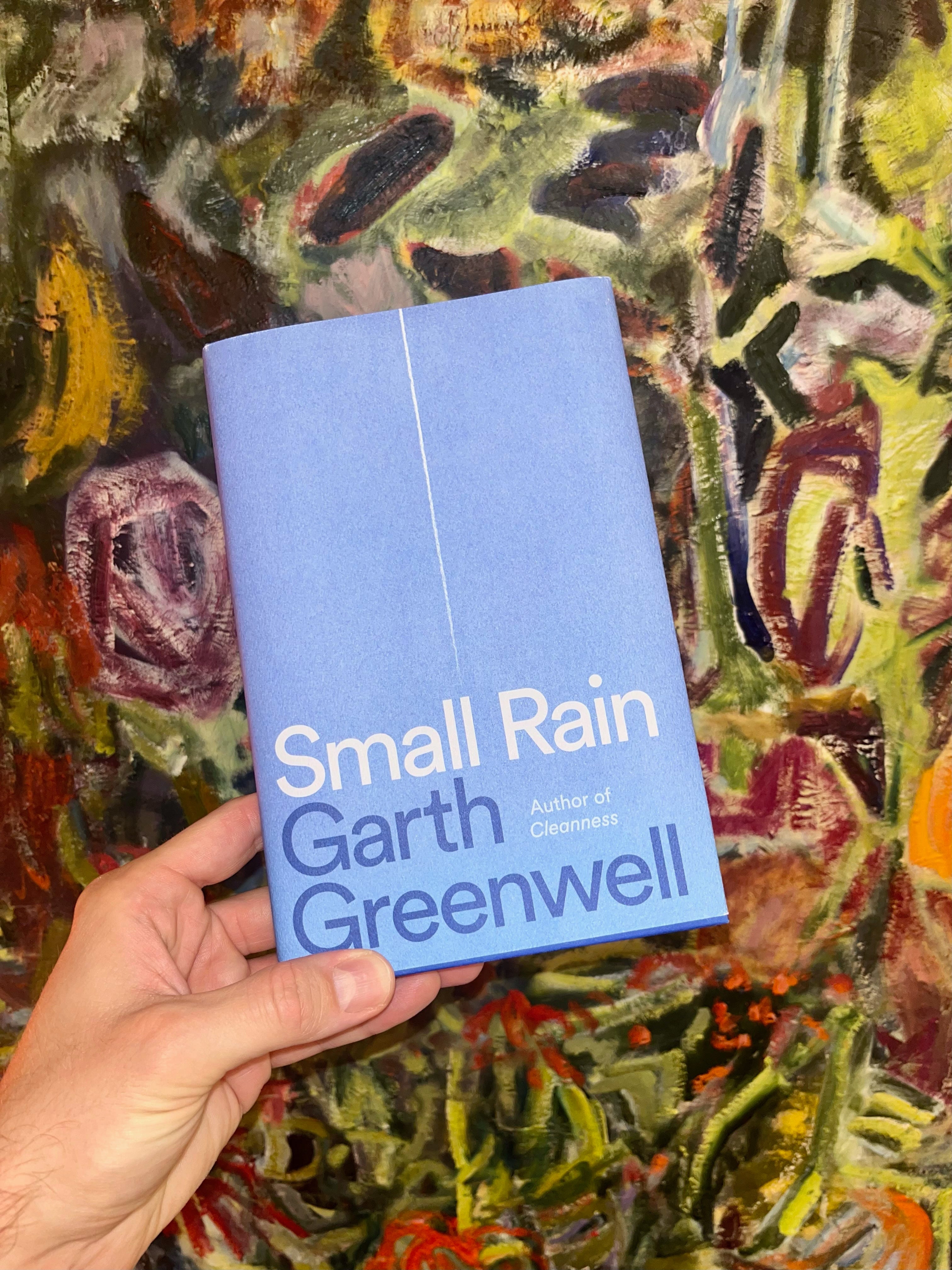
I enjoy Greenwell’s work, but I wouldn’t say I’m a fanatic or anything. Small Rain was good. I’ve also read Cleanness (liked it) and some essays (I’m sick in the head and will never not read about craft). I like his voice; he writes the way he thinks, it seems, or the way his narrators think, and I like that minimal psychological distance between myself, the narrator, and the author, it creates an impressive intimacy. But it’s not all intimate. Greenwell can and does write at length about the smallest (pretty much) insignificant details, like a poet’s word choice or his need for coffee, which, I find, in a long-winded, roundabout way balances out all the intimacy, and so the fine details produce a cooling effect.
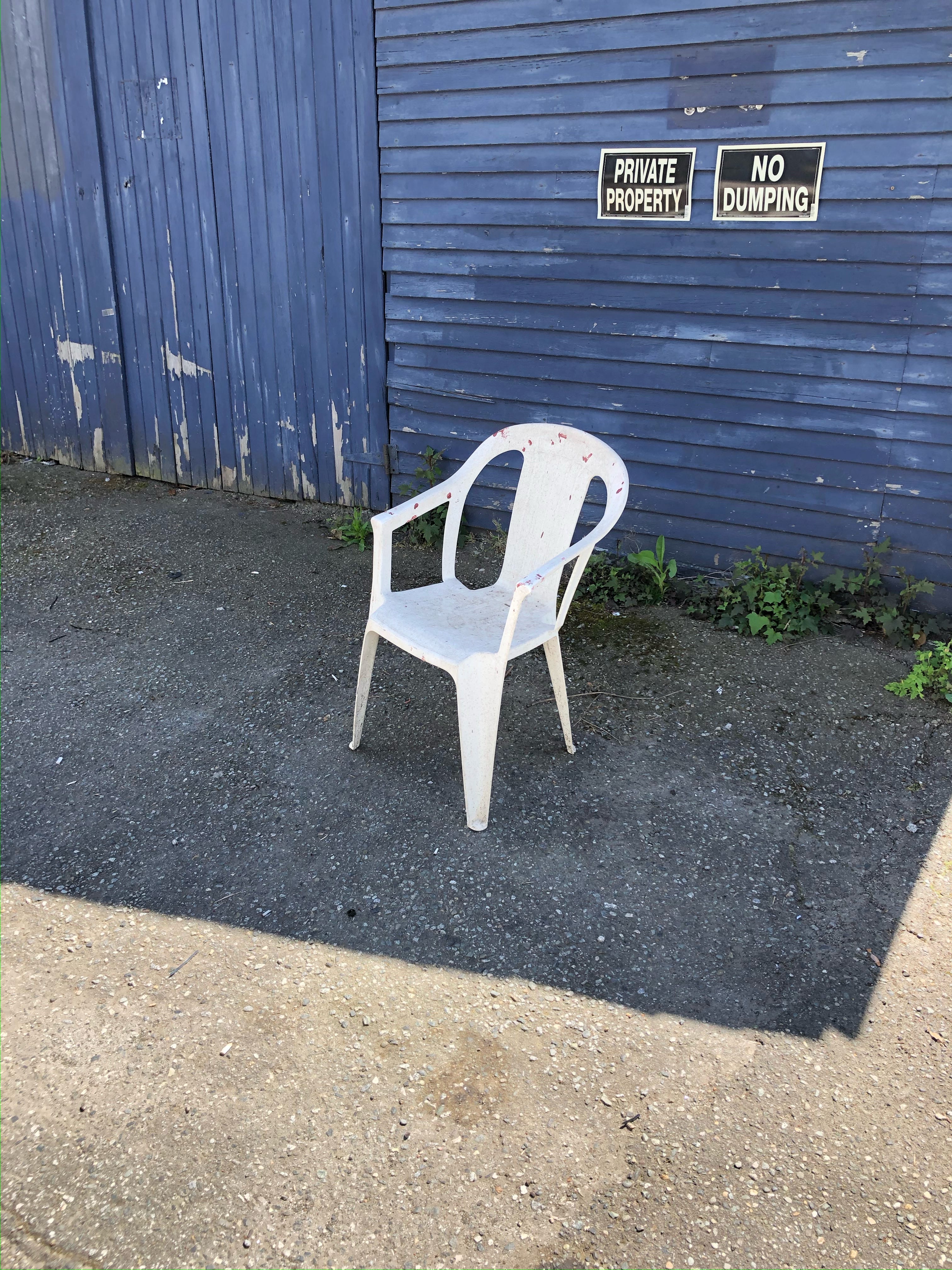
While reading Small Rain, I had a feeling similar to when I read W.G. Sebald’s The Emigrants. The pleasure I got from that book had less to do with its contents and more to do with its delivery. It’s as if Sebald could write about anything at all and I’d want to keep reading, hypnotized by sentences that justify their tendency to carry on. I’m doubly engaged as someone who admires such a style, curious to know why I find it so appealing. Greenwell’s writing has a similar effect.1 He’s a craftsman, and his work, not unlike a well-designed chair, can be used for its purpose and also admired. Not only can I sit, I’m equally curious to know how it was made.
Getting back to the topic of expectations, prior to getting my copy of Small Rain, I came across a Substack review that properly panned it, Naomi Kanakia’s “Garth Greenwell's book is unreadable”, which stuck with me after reading Greenwell’s book.
I try not to look into books or movies or records before I have a chance to read or watch or listen to them because I don’t want to tarnish the experience, especially one I’m looking forward to, but when I saw Kanakia’s incredible disappointment with the book, I couldn’t help but click. I liked the review because it seemed fair enough (it’s not hard to see why a reader might not like Small Rain, though that doesn’t mean it’s bad).
Now, having read the book, parts of the review interest me not entirely because of how it reacted to the work, which I will touch on a bit, but how it reacted to the work in the context of the publicity surrounding the work, the hype!, which ultimately got me thinking deeper about expectations and experience.
From Rave to Unreadable
I’m sure it’s the publishing industry’s prerogative to lay it on thick when it comes to an author of Greenwell’s status. It might even be the case that some of Small Rain’s rave reviews are the result of a select few having not even read the book at all, for profit or whatever, no secret there. I think it’s healthy to be dubious of our mainstream cultural institutions, but is the book unreadable?
From the review:
“...obviously nobody is reading these books for fun. Like, why would you? Garth Greenwell's book is full of these immense blocks of text that are quite unpleasant to read!”
To start, I found Small Rain to be very readable, I didn’t find it at all unpleasant, and I did in fact read it for fun.2
But to be more specific, this excerpt from Small Rain gets some heat:
“But maybe a Snickers bar is a wonderful thing, I had thought, I mean in a strong sense, a source of wonder, like G’s chips; maybe it’s unfathomably wonderful, both in itself, as a product of science and experiment, and also as the end point of a whole system of production and distribution, the ingredients sourced I’m sure from all over the world, which can only be abstract to me, I don’t have the brain for complexity and systems. But even in my dumb cartoonish way I could imagine what it must take to make the chip that had lit up my brain, my whole sensorium: the potatoes came from somewhere, they had been planted and harvested and packed and shipped; the salt had been mined, which is a process I don’t know anything about, I’m entirely ignorant; whatever machines had been designed and built to slice and fry, all of it at scale; and then there was the packaging, which was its own miracle, really, an extraordinary invention, a bag filled with air to cushion these impossibly fragile things, somebody had thought of that; and then the systems of distribution to carry them all over the country, the world, so that you can walk into a store in the middle of America, in a college town in Iowa, and for a few dollars fire up those points in your brain that mean pleasure. If all that wasn’t a source of wonder what was, and of deep wonder, there was nothing saccharine about it; of awe, really, since of course it was at once amazing, proof of ingenuity and genius, and also the product of unimaginable suffering, of exploitation and violence and labor, whole histories of conquest and colonization, industrial agriculture and ecological devastation; and along the whole chain the devastation of human bodies, from laborers in the fields to fat Americans shopping organic markets; and there was truth in that, too, the intrication of wonder and depravity, pleasure and violence. It’s something that saturates the past, that soaks the very root of history, and that permeates the future, too, the whole scale of human time, no document of civilization which is not at the same time a document of barbarism, no truer thing has ever been said, and it’s a truth we should acknowledge. Of course I see what the pundit was saying, it would be ridiculous to try to live like that, in the glare of all that wonder and horror, it would be absurd, simply impossible. But acknowledge that it would also be true, I thought as I listened to his laughter, the laughter of the audience, the conciliatory laughter of his interlocutor; acknowledge the inadequacy of any other response, acknowledge that it’s a failure to shut our eyes to it, a failure in the face of reality, a failure of perception and also a moral failure; acknowledge that the only vision of life we can bear is a lie.”
To which Kanakia responds:
“The acoustic properties of the writing are terrible, but why even talk about them when your mind will literally refuse to even read an entire paragraph.”
This feels like an exaggeration, much like calling the book unreadable, but I also don’t know anything about acoustic properties. If you’re reading this sentence right now3 I’m assuming you were able to slog your way through the unintelligibility of the excerpt—and my own writing—to arrive here. It does make for a good headline, though.
The excerpt (forever dubbed Snickersgate) also received some blowback in the comments section (overblown in my view) and was likely misread. One key takeaway from Small Rain, which is about a poet’s near-death experience after a sudden tearing of his aorta, is to illustrate how we can never fully appreciate existence (it’s miraculousness, it’s wonder) because we are always confronted with our selfishness, insecurities, our perpetual taking-life-for-grantedness, the daily grind of existence itself, etc., and so even a chocolate bar, as insignificant as it is (though truly a modern-day marvel) but not totally unlike the medications the poet is fed or the machines he’s hooked up to, can remind us how often we overlook the extraordinary, because that really is our default mode, overlooking. The Snickers bar isn’t just a Snickers bar.
The review continues:
“On the first page, it seems like the kind of book that’ll have something to say. But the moment you actually try to read it, you rapidly discover that on a sentence-to-sentence, paragraph-to-paragraph level, there is simply nothing in here that’s fresh or insightful.”
I found myself fascinated by this oscillation between near-death and bed-ridden play-by-play. But4 I can see how enticing it would be to come so close to death and want to write about it in some lofty way, to mine the experience for insight, and to plug into some understanding of existence beyond what was possible before such an experience occurred. I can also sense the impossibility of a task like that, like being baited to inevitably come up short. It would be much easier to rely on what one already knows, language for instance, and give oneself over to it in such a way so as to surrender to it completely. I think that’s what Greenwell’s book does well, as intended, as meaning can be derived from his reliance on language, and although it may be subtle, it’s there for the taking.
I bet Greenwell struggled while writing this book (from what I know about writing, it’s never easy) because language obviously pales in comparison to the reality of life and death. I feel like his only option in writing this book, an option which lends itself to the book’s form, was to focus on the hospital’s surroundings, how the nurses carried themselves, and his interactions with the doctors, all the while reflecting on his life up to that point, in an attempt to emphasize the weight of the situation, the minute-by-minute or hour-by-hour tedium and terror experienced after suffering the mysterious affliction. How else would one capture and relay what it was like? It seems impossible to unearth any truly life-changing insights beyond what we all already know, but forget on a daily basis, which is that life is huge, a wonder, and miraculous (see: Snickersgate). Any effort to capture that and to write about it in a worthwhile way, while doing justice to such an effort, in my mind, practically begs for a wall of text.
Or maybe not, it’s not for everyone, however, to say there is nothing “raw or forbidden or unprocessed” in this book is suspect.
(Last quote, I promise):
“…if Greenwell was a genius, we would still expect his books to receive a mixed reception… The only negative review it’s gotten came from Dwight Garner who, thankfully, said what we all know, which is that the experience of reading this book is tedious. Every other review simply took the book at its word, essentially quoting the back cover copy, and saying, “This is a masterful attempt at describing the experience of being in pain.” This is why I don’t believe what critics say about a book. ”
I don’t know about genius but I definitely agree with this part of Kanakia’s review, a mixed reception seems a lot more likely. But are our only options rave or unreadable? If everyone’s a critic, who do we believe?
I can’t say whether or not Greenwell’s book “is a masterful attempt at describing the experience of being in pain” because I didn’t get that from my reading. The narrator is in pain, of course, but it felt more like the pain was a pathway into deeper terrain, the pain incites his being incapacitated, resigning him to the whims of his own body, the people around him, and a nebulous healthcare system.5
Another review’s headline declares Greenwell’s book “The First Great COVID Novel” which I guess could be true, as the book is set during the COVID-19 pandemic. It states, “Small Rain, in some ways, is a pandemic novel—the first great one, and a very subtle one.” I don’t think I know what a “pandemic novel” is yet other than another way to mess with our expectations as to what kind of pandemic novel Small Rain might be.6 And while the pandemic certainly adds tension, it is secondary to the narrator’s crisis; another lens through which to analyze his situation and how he arrived at such a place.
I’m not sure if Kanakia read the book or not but I feel her review falls victim to the same line of thinking employed by the hype machine: relying on more surface-level insights and preset notions. “Of course it's bad. Aren't hype-machine books usually bad?” She writes, “Does it even matter if they're actually good or bad?”7
Maybe it doesn’t matter, but it also doesn’t seem fair to drag a writer’s work over the coals because of a dissatisfaction with the “institution of literature itself.”8 That there aren’t enough critical reviews of their book has nothing to with the author, obviously, but, with about a dozen rave reviews, it’s also no surprise that a reader might go in expecting to read a book worthing raving about.
Is the book unreadable? No. Should critics do a better job? Sure. But, ultimately, it’s the work that matters.
Swings and Misses
That title card about Cannes haunted my viewing of The Substance. After seeing that, I was expecting to be blown away by the story and I searched every frame for something more until I began to feel like I was missing the story altogether. But, no, that was all there was. The title card inflated my expectations and I couldn’t help it.
I had the opposite experience seeing Francis Ford Coppola’s Megalopolis. I went in unable to avoid its lore and memes and negative press and guess what? I loved it. A friend also told me to not expect much and so my expectations were less than zero. I’m sure this had something to do with my truly unforgettable experience. (You should go before it’s no longer in theatres).
And there is an interesting experiment going on in the way Megalopolis is told. Coppola obviously threw caution to the wind, and while the ambition of the project alone sets it apart, the Megalopolis aesthetic is really hard to pin down, its acting is out of control, and no one has ever seen anything like it—so I don’t think it’s entirely void of merit, but, sure, maybe it’s not great in the way the majority of us want our movies to be great.9 It’s also not unwatchable even though during the weekday afternoon showing I went to attendance dropped from eight people to four.10
All we can do is try to understand an artist’s intentions in order to make sense of those intentions in relation to the work’s vision.
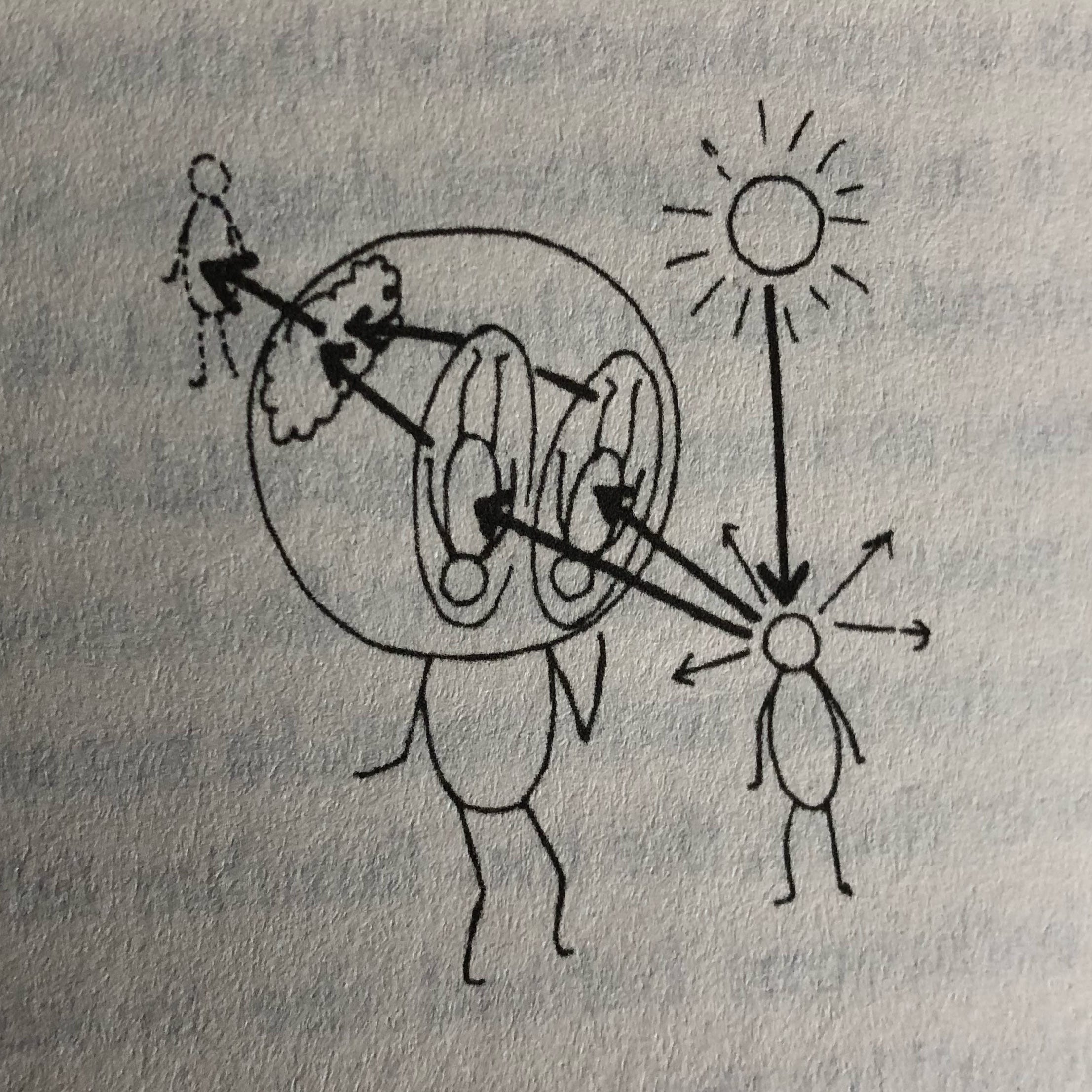
This is what artist’s fail at all the time by the way: whether or not their vision, which is what we end up reading or seeing or hearing, matches what they have intended. Failing to do so constitutes a swing and a miss. And when artists fail to accurately communicate their intentions, the viewer is justifiably unable to identify whether or not what they have experienced is a swing at all, let alone a miss.
A third failure, then, is when our expectations act as proxies for an artist’s intentions (and to further my misguided baseball analogy), leaving the artist in the dugout with no chance to step up to the plate, or more likely, they’ve batted but everyone was at a different field altogether.
My expectations were compromised when it came to The Substance and Megalopolis and probably Small Rain, in the sense that I had any at all, but of course we all have some kind of expectation when we sit down to watch a film or read a book (especially when we are paying customers), so maybe what this is is nothing more than a reminder to be more deliberate in managing our own expectations.
In a world fixated on headlines, why let the hype machine make us feel anything at all about a work of art? I don’t think The Substance knocked it out of the park, while Megalopolis obviously swung for the fences. Maybe Small Rain received too much praise for its own good, but the absence of critical reviews has nothing to do with its intentions or vision or whether or not Greenwell was able to reconcile the two. Small Rain is a smaller swing but by no means a big miss.
I googled the two authors and am not surprised to see that Greenwell cites Sebald as an inspiration, if not his biggest inspiration, during his switch from writing poems to writing prose.
He proclaimed, losing all respect.
Thanks for stopping by!
I say “but” too much but I'm trying to change.
If I had to nit pick, while the narrator is at times in excruciating pain, his pain is more often than not managed with pain killers.
When I think of a "pandemic novel", I can’t help thinking of something like Station Eleven... and Small Rain is not that. I guess now that our world has experienced a pandemic, the definition is sure to change.
The review makes it seem like she read it, but she does also claim it to be unreadable. Curiously, the excerpts she's chosen are all available online, in Google's 30-page preview, and an excerpt from much later in the book published on Greenwell's Substack.
What is fair, my inner voice asks.
When a friend who hadn't seen it asked if I could compare it to anything else, I said "You ever seen the episode of The Office where they show Michael’s movie Threat Level Midnight? It’s got that energy but the world is kinda like if Hunger Games took place in Chris Nolan’s Gotham but it’s all very Shakespearean."
This is just financially irresponsible behaviour.
I just ate a Snickers bar because I needed the maximum number of calories and the perfect combination of macronutrients delivered in the most efficient way possible. It worked, and you know what? That is sort of a miracle. Good review.