
Becoming the Intruder
Thoughts on Bret Easton Ellis’s (unofficial) autofiction trilogy: Less Than Zero, Lunar Park, and The Shards.

I felt a rush of relief finishing The Shards. I think because of my impatience. I listened to the audio version on the Bret Easton Ellis Podcast and when the end came and sounds of crashing waves began to blend into the song that accompanied all the previous episodes—a forgettable piece of soft rock that has since taken on a hypnotic quality—I let the song play out in its entirety, after which I pressed pause, removed my headphones, and found myself alone in the house.
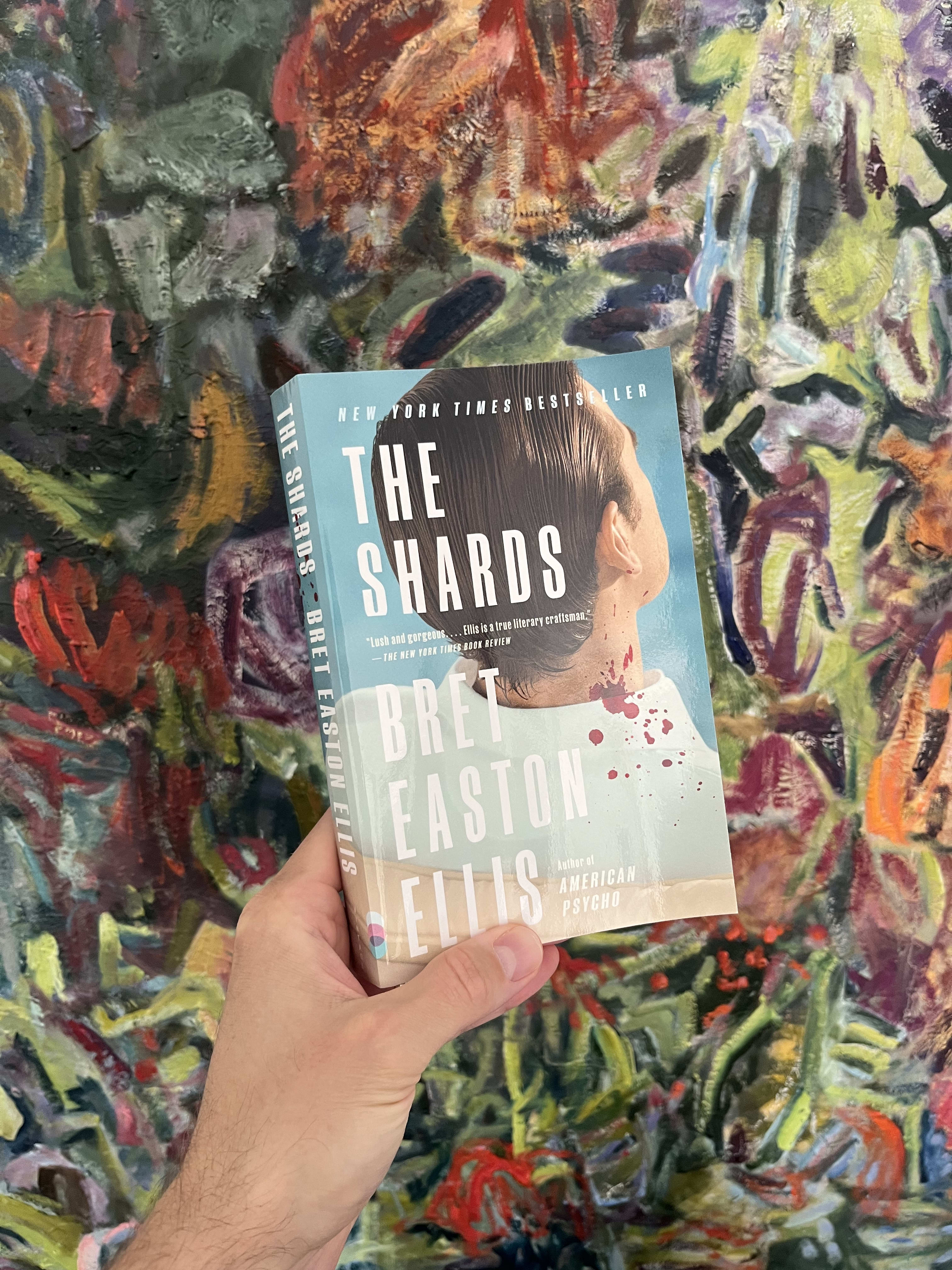
In the kitchen next to the living room where I sat at my desk, the refrigerator hummed, louder than normal it seemed, and the silence of the rest of the room felt loud, as if what I was actually hearing, or maybe listening for, was an absence, a blank space. With the story over and the fates of its characters—Bret Ellis, Debbie Schafer, Susan Reynolds, and Thom Wright—determined, I was relieved and unsettled and maybe a shred disappointed.
Most of The Shards takes place around 1981. It follows high-school senior Bret Ellis as he glides around Los Angeles, despite the drama unfolding among his friend group and the presence of a serial killer stalking the Hollywood Hills (two narratives not totally unconnected). None of this is unconventional, especially for those familiar with the repertoire of the author—L.A.’s dark side, really rich kids, a sense of dread, all things so numbed out they practically drip with Novocaine—but what separates The Shards from Ellis’s other work is its convincing metafictional narrative. This particular narrative, of which there are many in The Shards, really comes to life in its rawest form on the Bret Easton Ellis Podcast. Beginning in 2020, Ellis reads chapters from The Shards, which at the time of reading is said to be a work in progress, and he does so until he reaches the book’s conclusion, about a year later. This is how Ellis starts:
“I’m Bret Easton Ellis and you're listening to the Bret Easton Ellis Podcast and we’re recording this podcast on August 27th somewhere on North Doheny Drive, just below Sunset Boulevard. Many years ago I realized a book, a novel, asks itself to be written in the same way we fall in love with someone. The book becomes impossible to resist for the author, there’s nothing you can do about it, you finally give in, and succumb, even if your instincts tell you to run the other way because this could be in the end a dangerous game. Someone will probably get hurt. For some of us, the first ideas, images, the initial stirrings, can prompt the writer to begin automatically immersing themselves into the novel’s world, it’s romance and fantasy, it’s secrets. Or, for others, it can take longer to feel this connection more clearly, ages to realize how much you needed to write the novel, or love that person differently, even years later. I first thought about this particular book that I’ve begun to write, and telling this particular version of, uh, this story, the one I’m writing now, the one that I began when the pandemic started, but I first started thinking about it twenty years ago when I thought I could handle revealing to a reader what happened to me and a few of my friends one year at the end of high school, decades ago, when we were teenagers, superficially sophisticated children who really knew nothing about how the world actually worked. We had the experience, I suppose, but we didn’t have the meaning, at least not until something happened that moved us into a state of exalted understanding.”
Ellis sets up a few key details here: the way writing is like falling in love, irresistibly so, the consequences of a narrative (or narratives), the hurt they can cause, the sheer amount of time it has taken the author to reconcile the story, and finally the mystery and intrigue of it all.
He goes on to talk about the many false starts he experienced while attempting to write The Shards over the years, describing how at one point, without even writing a word, before picking up a pen, he shut the project down simply because “gently remembering” what had happened to him in 1981 proved to be “too unnerving.” He tries again five years later but upon typing up a few pages has a panic attack so severe he ends up in the emergency room. The memories of whatever happened are so intense he can’t write about it for another decade, not until it creeps back into his life around 2019.
The differences between the podcast and the paperback are slight. The paperback’s opening lines appear as such (emphasis mine):
“Many years ago I realized that a book, a novel, is a dream that asks itself to be written in the same way we fall in love with someone: the dream becomes impossible to resist, there's nothing you can do about it, you finally give in and succumb even if your instincts tell you to run the other way because this could be, in the end, a dangerous game-someone will get hurt.”
Here, the novel is a dream, and it’s the dream, impossible to resist, calling the shots. This suggests, however subtly, that the author is not in control. What effect does this have on the reader? If a book and its content can hold an experienced writer like Ellis hostage, it’s reasonable to assume a reader will find themselves in the same position, totally disarmed. Again, this is a small detail, but small details like this are why The Shards is so compelling.
Another noteworthy difference is the paperback’s omission of references to the podcast, as it comes out every week. Early on, podcast chapters of The Shards start with Ellis recounting interactions with listeners, usually family and friends, who have reached out to correct his narrative— whether or not he attended The Shining in the morning or afternoon—or to warn the author that an alias he used resembled too closely the real-life character being represented, or, finally, to question why Ellis insists on making what has since been private public by shining a light on their collective pasts.
I can understand why the podcast narrative and the listener feedback might be difficult to thread into an already delicately woven tapestry—Ellis, despite his casual affect, is meticulously crafting the reader’s experience and the podcast, as another narrative layer, would likely be too much.
The reason the beginning of this book is worthy of such scrutiny is because Ellis creates a convincing way in, the imaginary apparatus he has constructed is deployed well enough to almost not notice it.
An author only needs to start a book once and as the reader is transported to 1981 and the intricate design of the book’s intro gives way to new narratives, the stage has been set. And what comes really does feel real. In fact, as Ellis read aloud each chapter to me, while I laid on the floor or walked around the neighbourhood, I wasn’t entirely sure what was real or not. The paperback’s cover doesn’t indicate one way or another if the book is a novel or a memoir, it simply says the title and author’s name. Peak autofiction. And as young Bret’s story plays out in gritty, realistic detail—harm does come and people do get hurt—it’s hard to shake the notion that maybe (or because of all that legwork in the opening section) some of it is actually real, beyond just the autobiographical details that Ellis and Bret share (from L.A., went to the Buckley School, wrote Less Than Zero, etc.,).
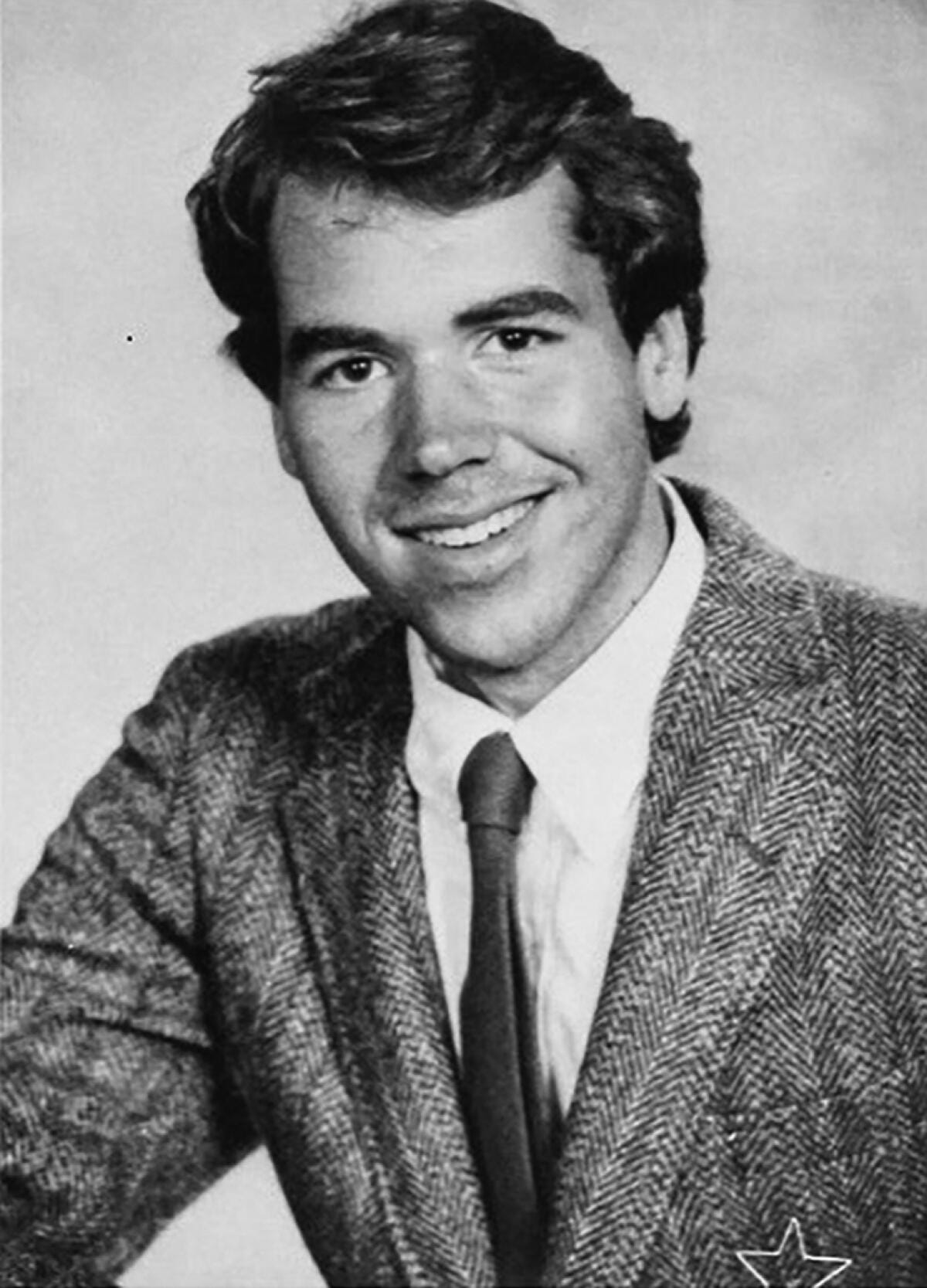
While speaking at the John Adams Institute Ellis says, “this book is about that senior year and a lot of it happened to me and a lot of it didn’t happen, but enough did…” He admits, by the time his senior year came around, he already knew he wanted to be a writer, he was already working on the book that would become Less Than Zero, and he lied a lot. His imagination got out of control. “I caused a lot of trouble my senior year. I was gay but I had a girlfriend. I imagined connections between friends that weren’t true. I believed a boy was in love with me. I believed actually that someone was connected to a criminal and that perhaps they were involved in the drowning of a boy who went to another private school,” and to fit in at his school, he says, “I pretended to be someone I was not.” This version of Bret is what Ellis refers to in The Shards as the tangible participant, a role played by Bret within another narrative the young writer has imagined. But this isn’t the first time this idea of performed narratives has shown in Ellis’s work.
“You’re not a fictional character, are you, Mr. Ellis?” a detective asks the protagonist, also named Bret Easton Ellis, in Ellis’s novel Lunar Park. In this book, from 2005, it’s possible to see the groundwork being laid for a book like The Shards, as though Lunar Park is the prototype, and just like in The Shards, Lunar Park contains not only lots of drugs, missing kids, and paranoia, it also experiments with its own form. Bret Easton Ellis, the narrator of the novel, shares a biography with the Bret Easton Ellis in reality, but the differences begin when, at the start of the book, Ellis has recently married and moved into a mansion, somewhere in upstate New York, with the famous (and fictional) actress Jayne Dennis and his 12-year-old son and six-year-old step daughter. The fictional world in Lunar Park attempts at the metafictional, in a way, when the details from Ellis’s previous books begin to appear in Lunar Park—a student named Clayton (re: Clay from Less Than Zero), a dog named Victor (re: Victor from 1998’s Glamorama), references to Camden College (re: Bennington), and a brief cameo from Patrick Bateman, the American Psycho, among many others. Essentially, what is happening in Lunar Park is a fairly typical haunting. While the protagonist of the book, an uber successful author, tries to find redemption from (what has been so far) a life of unapologetic debauchery, he is haunted, figuratively and literally, by all the stories he has told.
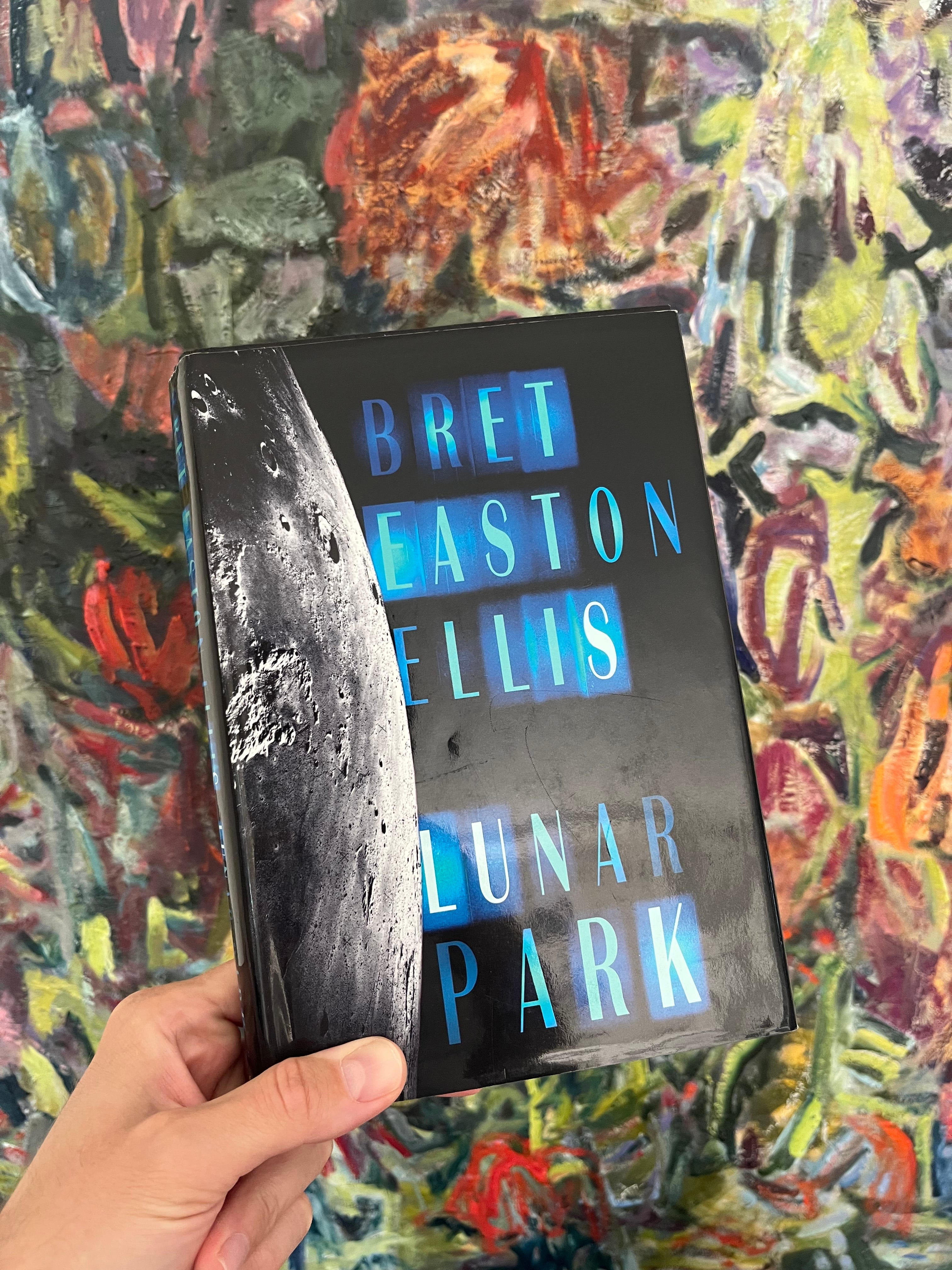
As the domestic drama unfolds, Bret tries to be a good dad but old habits die hard—how can they not when Jay McInerney shows up ready to party—but the ghosts from Bret’s previous books and past close in and tighten their grip on his psyche. As this happens, the reader is made aware of the hand of the writer, or the self-awareness of the book. It’s hard to describe, but while protagonist Bret descends into darkness (what’s real, what’s not real?) narrator Bret references the writing of the book—not necessarily Lunar Park, but the construction of a novel, the idea of the novel as a dream. Sound familiar?
(You dream a book, and sometimes the dream comes true)
(When you give up life for fiction you become a character)
These lines, which are delivered in parentheses, come from another conversation Bret has with Detective Kimball (yes, re: American Psycho) and are part of one of a few tactics used to push the boundaries of the novel’s mostly conventional form. These asides are made by an omniscient voice and can come at any time, usually when the reality of the book is at its most fractured. In addition to one of Ellis’s characters asking his protagonist, directly, whether or not he is a fictional construct, another tactic comes when some later chapters jump perspective between Bret’s first-person narration and a third-person known as “the writer,” who is basically a puppet master, pulling Bret’s strings and often confirming Bret’s darkest suspicions.
“I was not aware as I bent over the computer that the door behind me was slowly opening.
The writer assumed I had closed the door.
The writer even went so far as to suggest that I had locked it.”
And then later, as Bret drives along an interstate:
“Look how black the sky is, the writer said, I made it that way.
These parts, at times, feel heavy-handed in comparison to the light touch at work in The Shards. The metanarrative adds tension to Lunar Park’s thinner plot moments (Bret sees a crazy thing → No one believes him) but within the experiment is a heart that makes it worthwhile. In the same talk at the John Adams Institute, Ellis refers to people asking him if he will ever write a memoir, to which his response is that he’s written nine. Only the author can know how intensely affecting it could have been to find literary success at such an early age, but because of the contents of his books, and because of the times, he was as celebrated as he was disdained. Lunar Park, more than anything, tries to grapple with Ellis’s wider reception as an author. Long passages in it genuinely discuss the “unreliability” of a character like Patrick Bateman and the ethics of creating such a character (would it be Ellis’s fault if someone actually copied the crimes?) however, these sections are countered with news headlines—an epidemic of missing children, environmental catastrophe, unending terrorist attacks—and one gets the sense that Ellis believes there are far greater horrors in the world than an author writing horror fiction. Still, it’s possible how if you were a writer trying to write for that intangible sake of writing a profound work, only to be told you shouldn’t do it the one way you know how1 —and even still there are masses of fans who connect with your work—it’s possible to see why it might take the length of a novel to explore as much. Ellis’s attempt at a metanarrative begins to make more sense given the context .
I use the word attempt here because, while Ellis’s strategy in Lunar Park adds an interesting layer to the book, I’m not sure the same ground wouldn’t have been covered had he opted to stick to a shorter, conventional narrative. The third-person digressions and references to the idea of a novel (the dream) don’t feel like they go beyond the scope of a troubled and possibly hallucinating narrator; everything really is just a singular voice inside his head, and this fictionalized version of Bret Easton Ellis, always drunk, unfaithful, totally uncaring, wishing to be cool again, becomes a caricature of himself, and this caricature doesn’t match up with the more sincere moments of self-reflection presented by Bret Easton Ellis the author. But it is this same sincerity that is deployed so expertly almost 20 years later in The Shards.

If Lunar Park’s experiment with form just misses the mark, Ellis’s attention to aesthetic feels way off. The sentences flow and the dialogue is snappy, almost as if this book-writing business has become too easy, but they don’t culminate into a mood in the same way they do in previous books. In American Psycho, the singular, exaggerated persona (or lack thereof) of Patrick Bateman creates a seductively heady atmosphere of derangement that goes hand in hand with what we collectively imagine the worst of Wall Street might have actually been like; while Less Than Zero is infamously filled with simmering dread and a characteristic emptiness that transmogrify into a vacant and unnerving version of early 80s Los Angeles. The winding suburbs outside New York, complete with a mall, Starbucks, a campus where Ellis heads a writing class, and the gargantuan McMansion Ellis and his family live in don’t impact the story much outside existing to serve particular plot points, and it didn’t seem to matter that the new paint on the house was peeling or that footprints of ash appeared in every room or that a strange pair of swim trunks kept showing up, soaking wet every morning, on the patio.
Based on his previous books, the standard for style is a high bar. Maybe Ellis couldn’t find a way to impart his signature style onto suburban New York or the supernatural realm or dad life. Or maybe certain parts of a novel did come too easily for Ellis at this point in his career, opting instead to push the boundaries of his work in different directions rather than retreading familiar terrain. I believe this is partially true but also think that inserting yourself into a narrative might make it challenging to locate an aesthetic impulse that previously came from imagined realities rather than a real one.
Lunar Park’s ambitions might overwhelm its writer at times but without the attempt, I don’t think The Shards would be the achievement that it is.
In The Shards, the role of the tangible participant, performed by young Bret, is one devoid of emotion. At least, that’s the goal. If Bret can successfully mask the knowledge that he is gay, if he can hide his feelings for his oldest friend Thom, if he can keep appearances by dating Debbie (with the famous producer father), and if he can suppress his suspicion of the friend group’s new comer Robert, if he can do all that, he’ll have convinced himself that the potential implications of what he’s hiding aren’t real and he will be safe in his unfeeling. And for Bret, the sooner he can escape the grip of all this childishness, as sophisticated as it is, the sooner he will enter adulthood and find meaning.
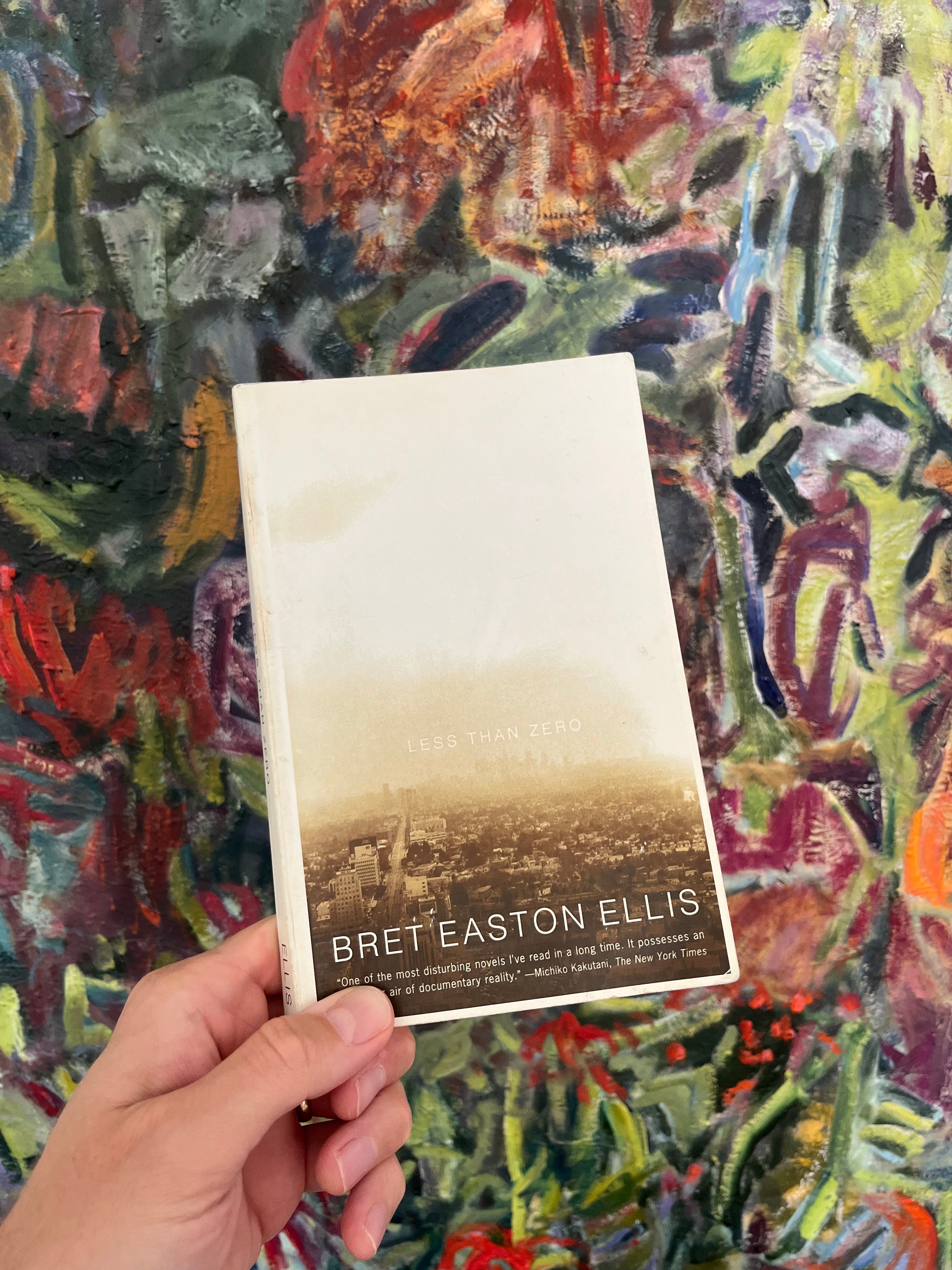
Doubling down on the idea of prototypes, Less Than Zero’s protagonist Clay is the original tangible participant. As a college freshman, he returns to Los Angeles to spend his Christmas break driving around, visiting friends, watching movies, and tolerating his family (among the references to drugs, porn, and child prostitution). While in The Shards, young Bret masks his feelings because of how much he cares, he is sensitive despite his posturing, Clay’s mask is nebulous and dense, like an all-consuming fog, and deploys itself quicker, no caring allowed, let alone feeling any one way about anything in particular. And it’s not just Clay, all of his friends and the people he interacts with wear the same mask, like everyone is playing a game of chicken to see who can care the least. This is, in part, what creates the feeling of casual nihilism the book is known for.
Clay meets his on-again, off-again girlfriend Blair for lunch on Sunset Boulevard:
“Did you ever care about me, Clay?”
I don’t say anything, look back at the menu.
“Did you ever care about me?” she asks again.
“I don’t want to care. If I care about things, it’ll just be worse, it’ll just be another thing to worry about. It’s less painful if I don’t care.”
So powerful was the voice of the tangible participant that Less Than Zero was, for better or worse, parodied in a story called “More Zero” by Donald Barthelme that appeared, during early Ellis mania, in the New Yorker:
"Are we together, or what?" she asks. "What's going on?" I suddenly remember sleeping with her when we were nine at her mother's house in Palm Springs and how tan she was and how tan I was and how we killed six bottles of her mother's Dom Pérignon and watched Alfred Hitchcock Presents and sent the poolman out for burritos and tortured the maid by threatening to eat her green card, Ashley upright and bouncing naked on the bed with the green card held just above her perfect white teeth, me wrapped in a towel and reading Architectural Digest. "I don't know," I say.
"Anyhow, it doesn't matter, can we kind of pay these guys and kind of get out of here?" She pops a lude into my mouth and leaves twenty more on top of the check and we split.
In Less Than Zero, it’s as if the characters don’t have any secrets at all, their affectlessness is the result of everything being laid out in the open—who’s dating who, who’s in the hospital, who’s using—the kids cannot be shook, and thus any real tension never materializes. But in The Shards, every character has secrets and the secrets create tension and the tension creates an undertow, building in power, like a wave before its crash. Secrets create new narratives and constantly give the characters new and different roles to play.

Reading Less Than Zero after The Shards confirmed why the latter is the more compelling book. Where Less Than Zero triumphs in its numbness, The Shards fails, but only because Ellis writes his way out from behind the mask, opening himself, and his characters, up to a level of honesty and truth the reader has previously only caught in glimpses.
From the opening of The Shards:
“[...] we were teenagers, superficially sophisticated children who really knew nothing about how the world actually worked. We had the experience, I suppose, but we didn’t have the meaning, at least not until something happened that moved us into a state of exalted understanding.”
Bret’s narratives are akin to visions of grandeur. He’s an 18-year-old fabulist writer and, from the start, his plan, his narratives, are a coping mechanism for not being able to express himself. In The Shards, Bret’s reaction to his emotions is to freeze them out. In Less Than Zero, it’s harder to tell if Clay feels anything at all and the most he can manage is caring just enough to return to school in January.
The Shards is a return to form and a settling of the score.2 That rare work that arrives later in a career, as good as the greatest hits, but improved upon, better.
But it can’t be forgotten, amidst all the autofiction and metanarratives, The Shards is a horror novel. Ellis leans into his tendencies for the extreme—the erotic, the gore, the pulp, and the unrelenting tension. But it’s his focus on character, the closeness and the depth he’s created, that gives him license to take the book into such territory, further into terror.
Bret is always keeping other people’s secrets, at times straddling very different public and private worlds. His girlfriend’s famous father comes on to him. He obsesses over a serial killer until he’s targeted by one. He follows a classmate on a whim and is himself followed by an ominous beige van. There is a cult creeping everyone out a la the Manson Family, secret admirers, missing pets, furniture in the pool house mysteriously rearranged.
Whether listening to the audio version or reading the paperback, The Shards breaks into your mind, and like all good books, it’s an intruder in its own right. It’s there, taking up space, while you wash the dishes, let the dog out, or lay in bed. And, when it was over, I was relieved, unsettled, and, as mentioned at the beginning, a little disappointed...3
The End of The Shards
I was relieved to find out that what happens in The Shards is not real, the climactic scene too crazy and violent, to be believed (even if there was a part of me that had wished otherwise). And I found the book to be unsettling in the way all truly scary stories are, stories that linger and, late at night, cause you to second guess whether or not the back door door is locked or a window closed.
My disappointment is less straightforward. The book’s ending is slightly ambiguous but, by the end, what isn’t is that Bret’s secret boyfriend has been murdered, his girlfriend’s horse has been mutilated (in addition to her being devastated by Bret’s indiscretion), his best-friend super couple Susan and Thom have barely survived a violent attack by a masked intruder, and the new student, Robert Mallory, has died during a fight with Bret. Give some key details more weight than others and take into account that perhaps our narrator was never totally reliable to begin with (name one narrator that is) and Bret could be to blame for all the above.
Which is where this light feeling of disappointment comes from. I think because Ellis has created such a dynamic story, my personal choice would have been to lessen the throttle, letting the murders remain a myth, leaving them lost to history, similar to how the story had been framed at the outset. This choice would have sustained a level of realness that would have kept readers unsure of the actual reality of events, forever wondering what actually happened to Bret and his classmates. But, Ellis is a real guy, a public person, and that level of commitment enters performance art territory and I can see how that wouldn’t be worth much of anything to the author anyway, similar to the choice to not include the podcast narrative within the actual paperback, it just wouldn’t have been worthwhile, answering the same questions from crazed fans about his high school years over and over—and who cares, anyway?
My disappointment proves the books accomplishments: The Shards manipulates its reader in such a way that some disenchantment is inevitable, because you can’t help rooting for young Bret, can’t help feeling let down by him if he is, in fact, responsible.
But the ending is riveting and fun and unexpected. And with Bret at the centre of it all, blood on his hands, the end is where the novel finally deviates from autofiction into pure horror. Or does it? As it turns out, Bret is the intruder, but so too is the writer, Bret Easton Ellis. Intruders all the way down.
(When you give up life for fiction you become a character)
- Lunar Park
Ellis has never won any major literary awards, which I mention because his fame might suggest otherwise. He could also be one of the only living “household names” in fiction. Probably not, though.
For what it’s worth, I have not read Rules of Attraction (tried), The Informers, Glamorama (tried), or White. The first book I ever read by Ellis was Imperial Bedrooms (!). I found it in a hostel and was so dumbfounded by its content that I had to read a few passages to my friends. I’ll return to it one day but it didn’t feel right jamming it into this essay, even though it is a sequel to Less Than Zero, maybe next time.
Possible spoilers.
Absolutely phenomenal piece man! I've only read Less Than Zero and The Shards (liked the former, loved the latter), but this is such a sharp analysis of his whole career. I think I agree on the ending actually—it's crazy and gory and totally compelling, but up til that point part of me genuinely believed some of the more out there sections of the plot might have happened? Anyway, I had a hell of a time reading this—great, great essay
Fantastic work! Made me pity the Bret of LTZ. The world cheered on the debauched masque put on by this hurt young man. Highly recommend Glamorama, by the way.